Is IPA From India? What Beer Names Actually Mean

Updated: Sep 15
"Is the IPA from India?"
It comes up a lot, and it's a fair question. The letters do stand for India Pale Ale. The name just isn't telling you what people assume it's telling you, and it hasn't been for about two hundred years.
A tap wall is an odd thing to read. Twenty handles, twenty names, and most of those names describe a recipe, a method or a piece of history rather than what's in the glass. A few are actively misleading. TapHouse Frankfurt pours 20 rotating taps at Mendelssohnstraße 51 in the Westend, so here is what the words on them actually mean.

Almost none of them are from where they say
Four beers on our wall right now have a place in the name and are brewed somewhere else entirely.
Camba IPA: an India Pale Ale, brewed in Bavaria. The style was invented in England.
Fuerst Wiacek Turtledove: a New England IPA, brewed in Berlin.
Kinn Bryggeri Sjelefred: an English Brown Ale, brewed in Florø, Norway. They specialise in English and Belgian styles on purpose.
Camba Braumeister Edition 99: a California Common, brewed at the Chiemsee.

And that's only the taps. The bottle and can fridge runs to more than 130 beers, and the labels in there do exactly the same thing.

Place names in beer are style descriptions, not addresses. It works the way Bolognese does: the word tells you the recipe, not where your dinner was cooked.
So what does IPA stand for, and why India?
India Pale Ale. English brewers in the 1800s shipped pale ale out to India and hopped it heavily, because hops act as a preservative on a long sea voyage. The name attached itself to the recipe and stayed there long after the ships stopped.
Nobody in India invented it. Almost none of it goes there now. Today the three letters tell you two things: hoppy, and usually stronger than a lager. Ours runs 6.6%. They tell you nothing about where it was made.
New England IPA is not from England either
New England is a region of the United States, and the style came out of Vermont in the 2010s. It's the cloudy, soft, tropical-tasting kind of IPA, hopped for aroma rather than bitterness. You'll also see it written as Hazy IPA, which is the same thing and considerably more honest about what you're getting.
It isn't only IPAs, either. The same approach gets used at lower strength, where it's called a New England Pale Ale or Hazy Pale Ale. We have two on right now, both 5.3%, from Kuehn Kunz Rosen in Mainz and from Schwarze Rose. Same cloudiness, same fruit, noticeably less alcohol. If the hazy IPAs feel like too much, that's where to go instead.
At the strong end sits Turtledove from Fuerst Wiacek: a Berlin brewery, brewing an American style, named after a region of the United States that happens to share its name with England.

Helles or Pils?
This is the one most customers ask, and we have an unusually clean way to settle it. Both of ours are Camba, both 5%, sitting a few handles apart. The recipe is the only variable.
Pils is more bitter. Helles is maltier and rounder.
That's the whole answer at the bar. The slightly longer version, as Camba put it:
Pils comes from Pilsen, in Bohemia. Helles comes from Munich.
Pils leads with hop aroma and a firmer bitterness. Helles leads with malt and finishes slightly sweet.
Both are golden, but Pils is usually the brighter and clearer of the two. A Helles can carry a faint haze.
If you want the full piece, Camba have written it up properly.
What I actually say is: taste both. Two small glasses settles it in about thirty seconds, and no description of mine is going to beat tasting them side by side.

"Ein Trübes, bitte"
Ask for a cloudy beer in Germany and you mean something specific: an unfiltered lager. Kellerbier, or Zwickelbier. On our wall that's Brauhaus Faust Kräusen Naturtrüb at 5.5%. The haze is yeast and protein deliberately left in, and it tastes bready and soft.
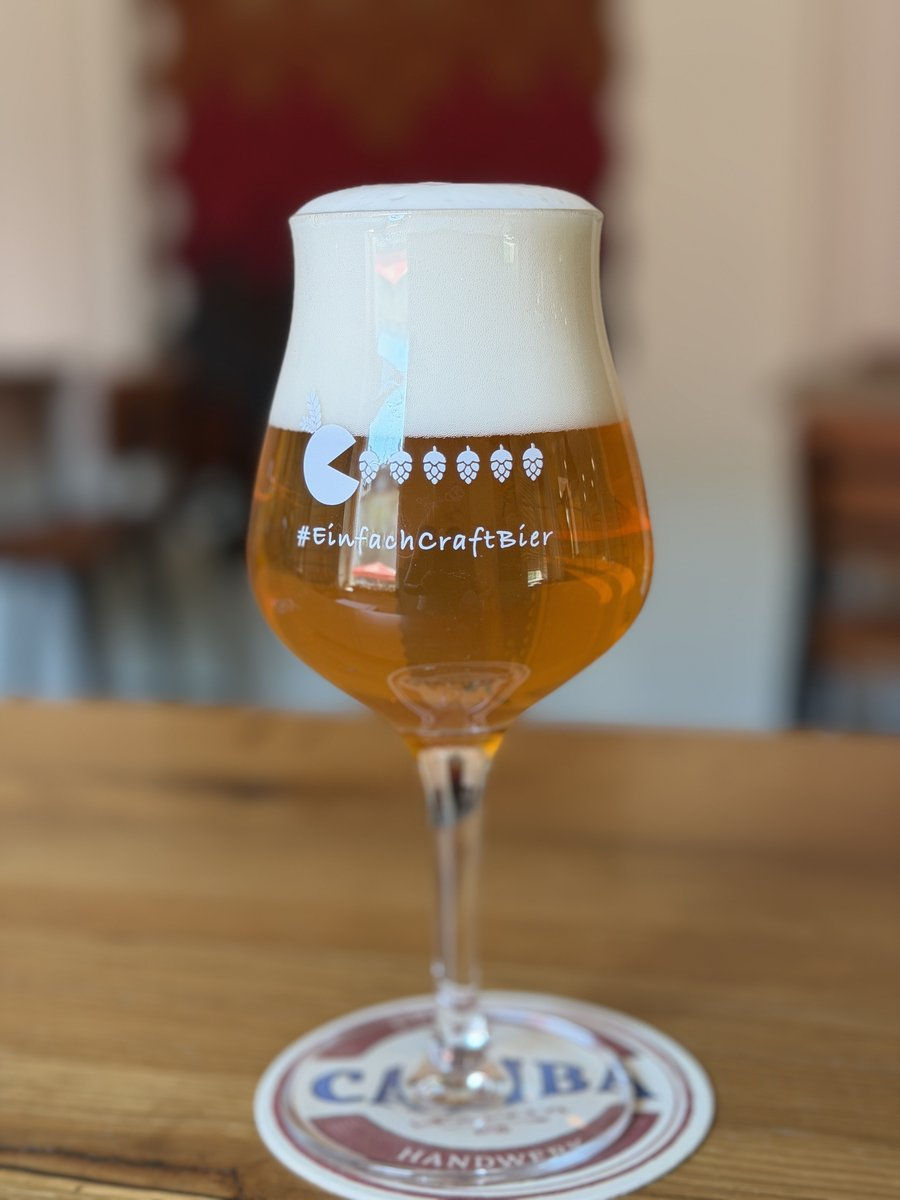
But five others on the wall are cloudy for a completely unrelated reason. The three hazy IPAs and the two hazy pale ales get their murk from hop compounds and protein held in suspension, deliberately, in a modern American style. One is a traditional German lager. The rest are American-style ales, and the strongest is 8.4%.
Both are trüb. So ask for "ein Trübes" here and you'll get a question back before you get a beer: the German kind, or the hoppy kind? It takes five seconds, and it saves you from an 8.4% American IPA when what you wanted was a Kellerbier.
And no, neither is off. Cloudiness would be a fault in a Pils. In these it's the entire point.
The two words that actually predict the beer
Ignore the poetry in the name and look for these instead.
Lager or Ale. That's the fermentation. Lager is cold and slow, which makes it clean and crisp. Ale is warmer and quicker, and the yeast throws off fruit and spice notes while it works. Helles, Pils, Kellerbier and our Chiemsee Black are all lagers, even though one of them is nearly black.
Pale Ale, IPA, Imperial or Double. That's an intensity ladder inside one family. More hops, more malt, more alcohol at each step. Our pale ales sit around 5.3%; the Imperials on today's list run from 7.6% to 8.4%. If a name carries Imperial or Double, treat it as a strong beer whatever else it says.
Colour words are the only ones that mean exactly what they look like. Hell is pale, Dunkel and Black are dark. Though as I've written before, dark tells you about roasted malt, not about strength.
You don't have to work any of this out
These names are a filing system assembled over two centuries by people who weren't coordinating with each other. Useful once you know the code, mildly deceptive until then.
So ask. "What does this one actually taste like" gets you further than any label will. The current tap list and the bottles and cans are on our live menu, which updates itself daily, and we run guided tastings in English and German if you'd rather have the wall walked through properly.
A Baltic porter brewed in Bavaria and named after Tallinn is the same trick in another language, and we took that one apart in Latvian and Estonian beer in Frankfurt.
Hops. Heat. Frankfurt.
Questions we get asked at the bar
What does IPA stand for?
India Pale Ale. English brewers in the 1800s hopped pale ale heavily so it would survive the voyage to India, and the name stuck to the recipe. Today it signals a hop-forward beer, usually stronger than a lager. It says nothing about where the beer was brewed.
Is IPA beer from India?
No. The style was created in England and named after where it was being shipped. Modern IPAs are brewed everywhere, and very little of it goes to India. The IPA on our taps at the moment is brewed by Camba Bavaria, in Bavaria.
Is a New England IPA from England?
No. New England is a region of the United States, and the style came out of Vermont in the 2010s. It describes a cloudy, soft, fruit-forward IPA with low bitterness, also sold as Hazy IPA. We currently pour one brewed in Berlin, which makes the name doubly misleading.
What is the difference between Helles and Pils?
Both are pale German lagers of similar strength. Pils originates in Pilsen, leads with hop aroma and finishes drier and more bitter. Helles comes from Munich, leads with malt and finishes rounder and slightly sweet. Ours are both Camba at 5%, so recipe is the only difference between them.
Why is my beer cloudy, and is it off?
Almost certainly not. Two different things on our wall are cloudy on purpose: unfiltered German lagers such as Kellerbier, where the haze is yeast and protein, and hazy New England IPAs and pale ales, where it comes from hops and protein. Cloudiness would be a fault in a Pils. In these it's intended.
What is a Kellerbier or Zwickelbier?
An unfiltered, often unpasteurised German lager, served naturally cloudy. It tastes softer and breadier than a filtered Helles because the yeast and protein are left in. If you ask for "ein Trübes" in Germany, this is usually what you mean rather than a hazy IPA.
Written later, and the practical companion to this one: whether an IPA actually works with a curry depends entirely on how bitter it is, which is why a West Coast and a hazy end up on opposite sides of the same dish. That is in where to eat near Messe Frankfurt, and what to drink once you get there, along with how to order in an Indian kitchen if you are not sure about the spice.


Comments